Parliamentary standing committee on labour, led by Biju Janata Dal MP Bhartruhari Mahtab, has said in its report that it is unjustifiable for owners to pay workers' wages during natural calamities.
Ensuring health insurance for all workers would be major challenge for the industry that is already grappling with cash crunch, and the government should have borne the cost.

Daily wagers are running out of resources, including ration and cash, and the state governments might not be able to sustain their needs for a longer period of time, given the lockdown has already been extended until May 3.
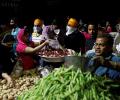
There have been several instances of traders dumping fruits and vegetables outside mandis. Or of farmers dumping produce outside their villages or feeding them to their animals.

The labour ministry has made public a list of 60 officers -- essentially labour commissioners in 20 regions across the country -- along with their e-mail address and contact numbers. They will deal with distress calls from workers who are working under the 'central sphere'.

'What is hindering us is the fear for the disease.' 'For those below the age of 55 years, it's a mild disease.' 'So take care of yourself, your family and your parents.'
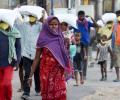
The Union home ministry and the labour ministry have asked state governments to coordinate with the chief labour commissioner's (CLC's) office to give a comprehensive data of all the migrant workers by April 11.

A senior official in the central labour commissioner's office said the efforts of the government were to resolve the cases amicably and not to press for legal action against employers. "Everyone is going through tough times. We could initiate legal action if we want but that's not the idea. We want to address the issues amicably," the official said.
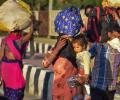
The Centre and state governments bonded and then fell apart during the longest lockdown walk.
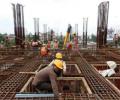
Around 81 per cent of the workers constitute the unorganised sector - devoid of any social security cover and outside the purview of a complex set of labour laws.

The Seventh Pay Commission had decided to choose the CPI-IW as the index for adjusting inflation for central government employees.
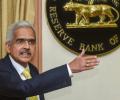
Taking advantage of the RBI's different accounting year, the Centre had started demanding an interim dividend till the time the latter's final balance sheet is prepared (usually in August). To address this anomaly, an expert committee led by former RBI governor Bimal Jalan had recommended aligning the RBI's financial year with that of the government.

Facebook-owned messaging service WhatsApp has secured regulatory approval for launching its digital payment platform -- WhatApp Pay -- in a phased manner, close to two years after the US-based company's pilot run.

The government has found about 900,000 beneficiaries of its flagship job formalisation scheme, the PMRPY, were ineligible in the first place as they were part of the formal economy even before the inception of the scheme. The EPFO has also recovered Rs 222 crore so far from the employers concerned.

'The banks cannot pass on the hike in premiums to its customers, according to the norms. The premium won't go up substantially in any case and may be hiked to 12-13 paise (per deposit of Rs 100 a year),' Finance Secretary Rajiv Kumar said.
This demand comes at a time when the government is falling short of its revenue targets due to dwindling tax and low disinvestment receipts. It could account for the dividend in the upcoming Union Budget on February 1. RBI is, however, yet to take a final call on the government's demand and might decide on this at its central board meeting scheduled for February 15 in New Delhi.

The banking regulator is seeking an early exit mechanism for private banks under Prompt Corrective Action.
C P Chandrasekhar, who has served on key statistical panels in the past both as a chairman and member, said he was present in the campus when the ruckus broke out on Sunday and found the incident "disturbing" and "unprecedented", and that it further undermined the faith in the system. Somesh Jha reports.

The net NPA ratio declined to 3.7 per cent in September 2019 from just below 4 per cent in March 2019, reflecting increased provisioning.

This, said Sitharaman, would remove the possibility of unauthorised communication "and consequent harassment", which was a cause of concern for bankers.
 © 2025 Rediff.com - Investor Information - Advertise with us - Disclaimer - Privacy Policy - Sitemap - Feedback - About us - Terms of use - Grievances